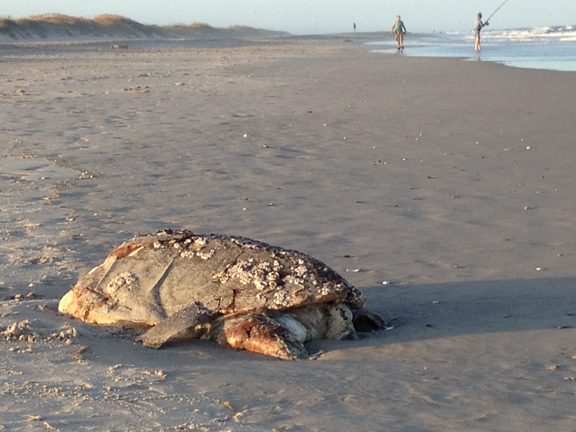
Are there really any ‘bad’ bugs? I doubt it. At 341 On The River, our baby birds need bugs as breakfast food.
These two in the Robin’s nest in the Catalpa tree just outside the back door, are constantly clamoring for food.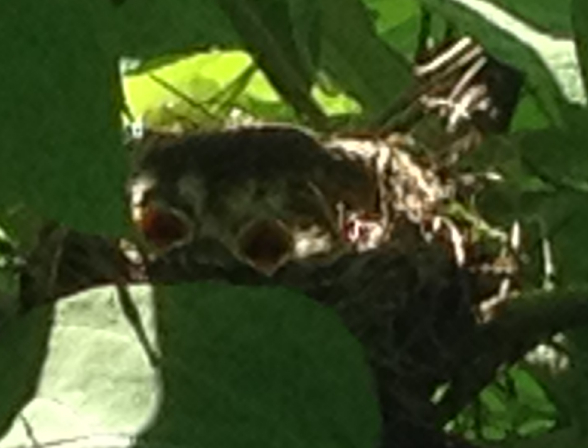
(Could this sad and hungry one on the ground, with a crossed beak, have been thrown out of its nest?):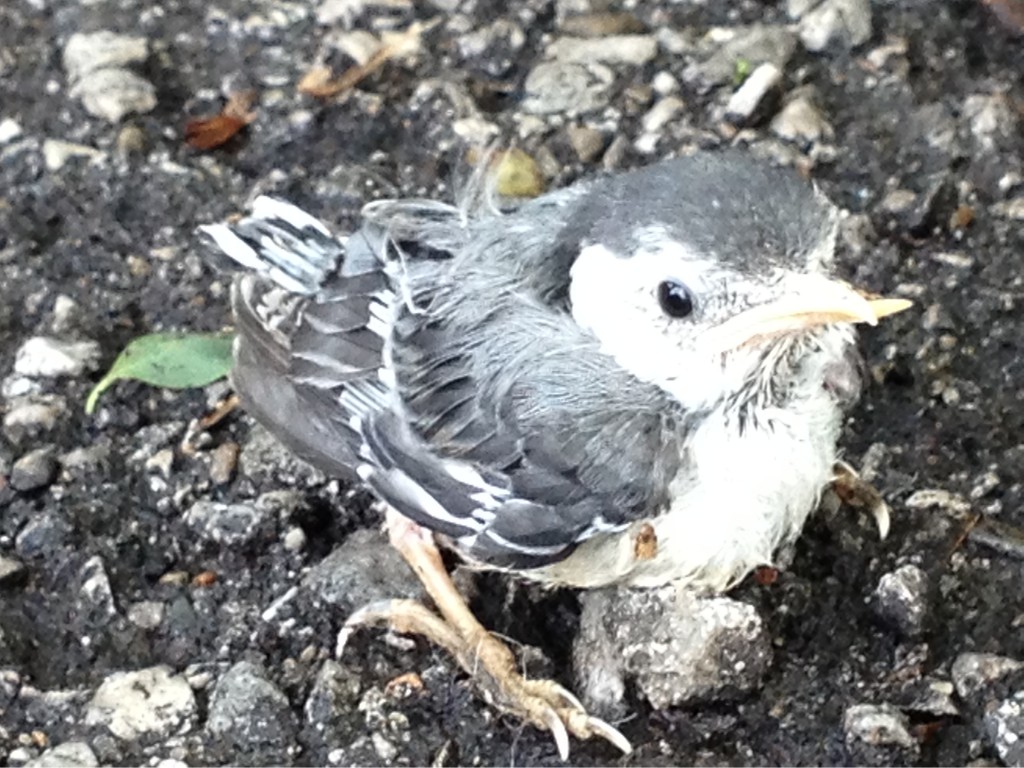
We must not needlessly kill all the bugs in our gardens, fields and roadsides by spraying insecticides everywhere. If we do we will drive them into extinction, along with birds and other animals who need them as food. It can’t be right to do that just because we might feel ‘bugged’ by them. Do you realize how few frogs there are now compared to the years of my youth? This is the only one I’ve seen here for many years. 
Spider Stew. Fresh meat for some hungry nest: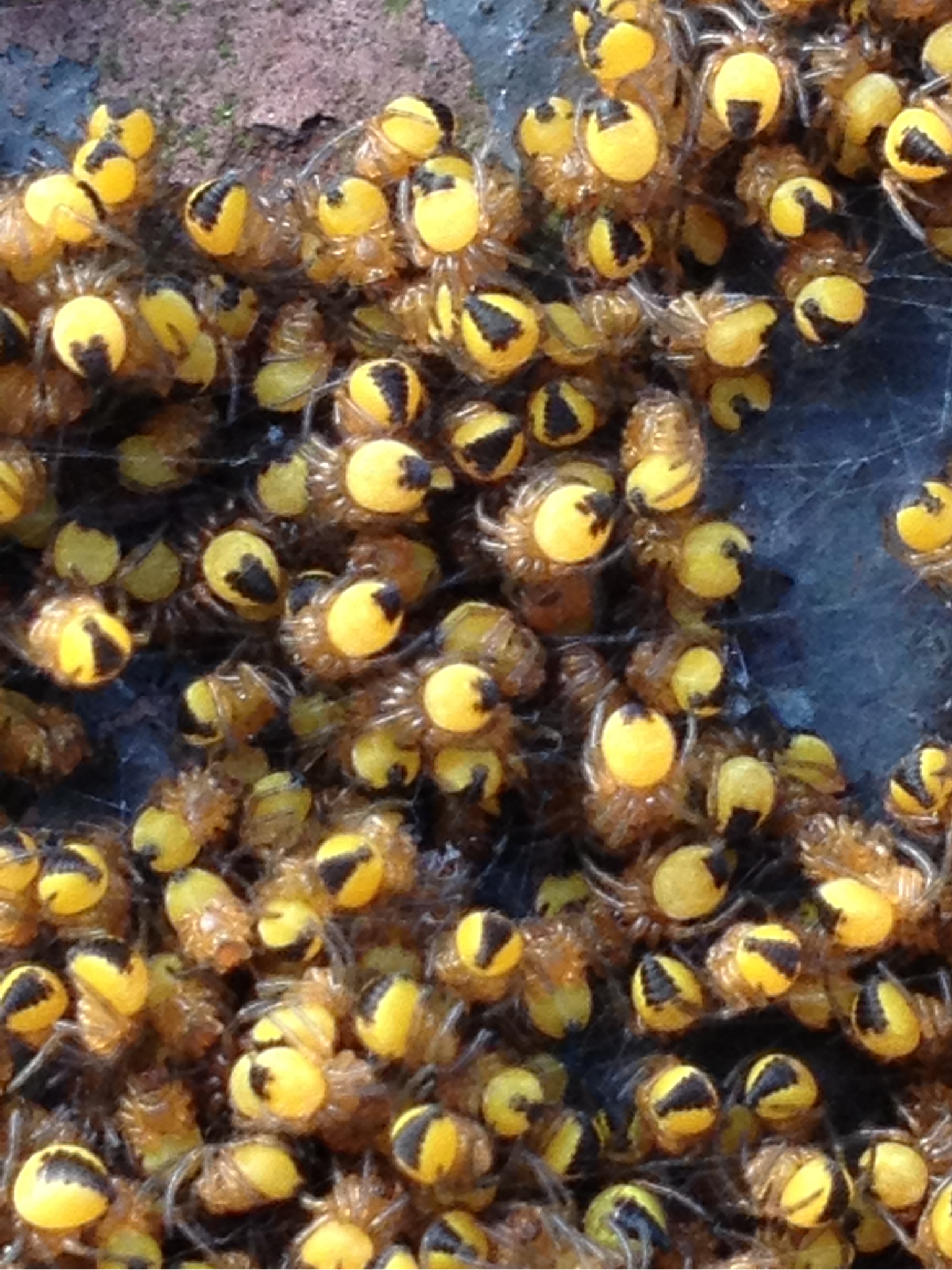 This great collection was on the back landing just waiting to be discovered by the birds.
We need these bugs (ants) to open the Peony flowers. By some evolutionary symbiosis the plant rewards the ants with a sugary food in return for their labor and we get magnificent blossoms in return.
Most bugs are harmless and, like my bees, only reluctantly bite you if they’re forced to defend their homes.
Most bugs need food (not the Mayfly when they finally come out of the water) so don’t be surprised if they try to nibble your naked flesh when they’re hungry and you are tempting them.
I agree mosquitoes and ticks can be a nuisance; black flies can be an even bigger nuisance; cockroaches are only eating the food we leave out for them, and I don’t see much place in the ecosystem for bedbugs. But we must not poison them all because when we do that there is too much collateral damage to the whole environment (including humans too).
You can readily control bugs by:
- Don’t feed them: simply cover your flesh when outdoors so the ticks and mosquitoes can’t get to you – Bee suit modeled by Tess:
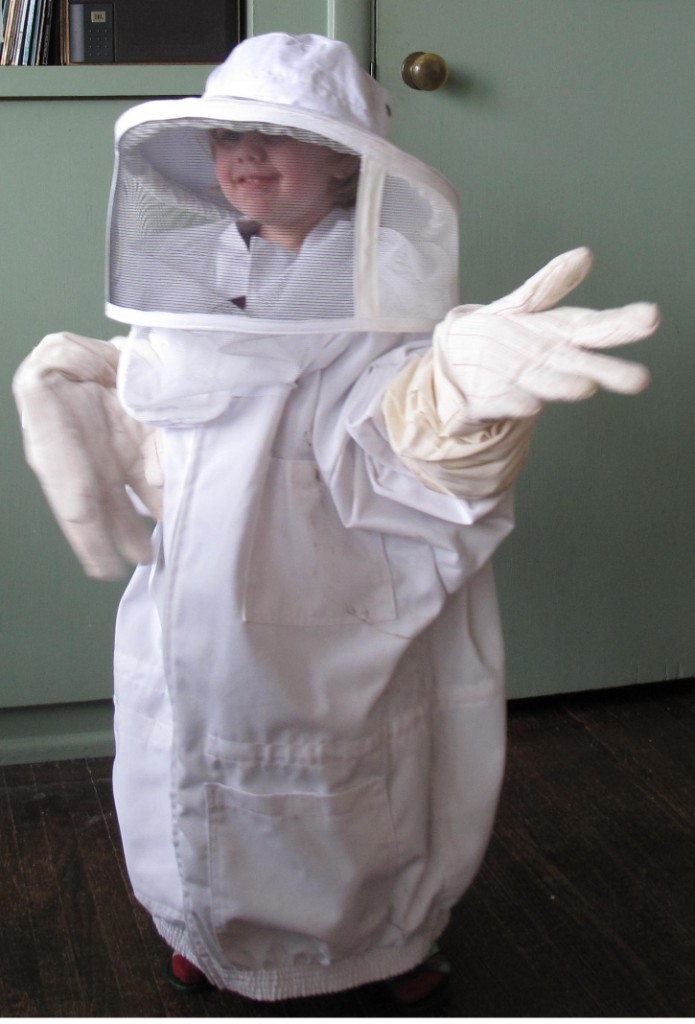

2. Don’t annoy them: If you move a wasp’s nest, or try to take the bee’s honey, don’t be surprised at their defensive actions.
3. Starve them out: don’t leave food crumbs around indoors. Keep food in containers with tight doors or lids. Change the sheets frequently to keep bugs out of your bed.
4. Selectively kill the ones you really don’t want: I find it much quicker to simply squish, with my fingers, any aphids and scales on my indoor plants rather than mixing up and applying strange ‘soap’ solutions. (The fruit flies that escape from the banana peels in my worm farm drown happy in the beer and wine trap beside it). House insects that I don’t want are easily sucked up with a 600 mm (2 ft.) long, 50 mm (2 in.) dia tube on the end of a portable dustbuster vacuum cleaner.
Bugs can help us like the canary in the coal mine: You can easily use them to get a very quick measure of the water quality at your fresh water river or lake. The following list shows 3 groups of bugs you can readily find in the reeds, or under the stones, with a 1 mm (1/32 in.) mesh net.
They are grouped by their tolerance to common pollutants. If you find all 3 types, your water is good. If you only find Group 3 then “Don’t drink the water”. (This should be applicable in upper NY state too?)
Here are a few we found in the upper Maumee River:
Crayfish
Rupert
Dragonfly Nymph
These are bad bugs. Plastic & Steel River Bugs: 
They are the wash-down of lost lures from the Walleye fisher folk that I collected in the Maumee River this spring. Sadly they can interfere, often lethally, with many innocent birds further downstream, to say nothing of the hazzard to bare-footed kyakers and windsurfers.
Some bugs are just extraordinary:
Siobhan’s Rhinebeck, NY, 17 year Cicada. Their noise was very loud last week
The real joy of the bugs in my garden at 341 is the exotic zoo I’ve found there, and it is all for free. The range of gorgeous designs, forms and colors is endless. A simple magnifying glass reveals awesome details. For the hunter in us there is also the thrill of catching them photographically and then trying to make a good ID with the many free internet sites available.
Here are some of my favorites. Many need better ID names which you are free to suggest, but this is a start:
Mayfly This species is a great water quality indicator. This year Lake Erie at Monroe MI is greatly improved. They’ve been so thick on the ground that cars have skidded.
Igor:
Creepy:
Dog Tick:
Most of the following bugs are part of the essential large group of pollinators. Without them most of our flowers wouldn’t blossom and many of our fruit trees and bushes would be barren.
Small Bee:
Demon Damian:
This Hover Fly seems to have vertical rather than horizontal wings:
Ivan:
Rosy: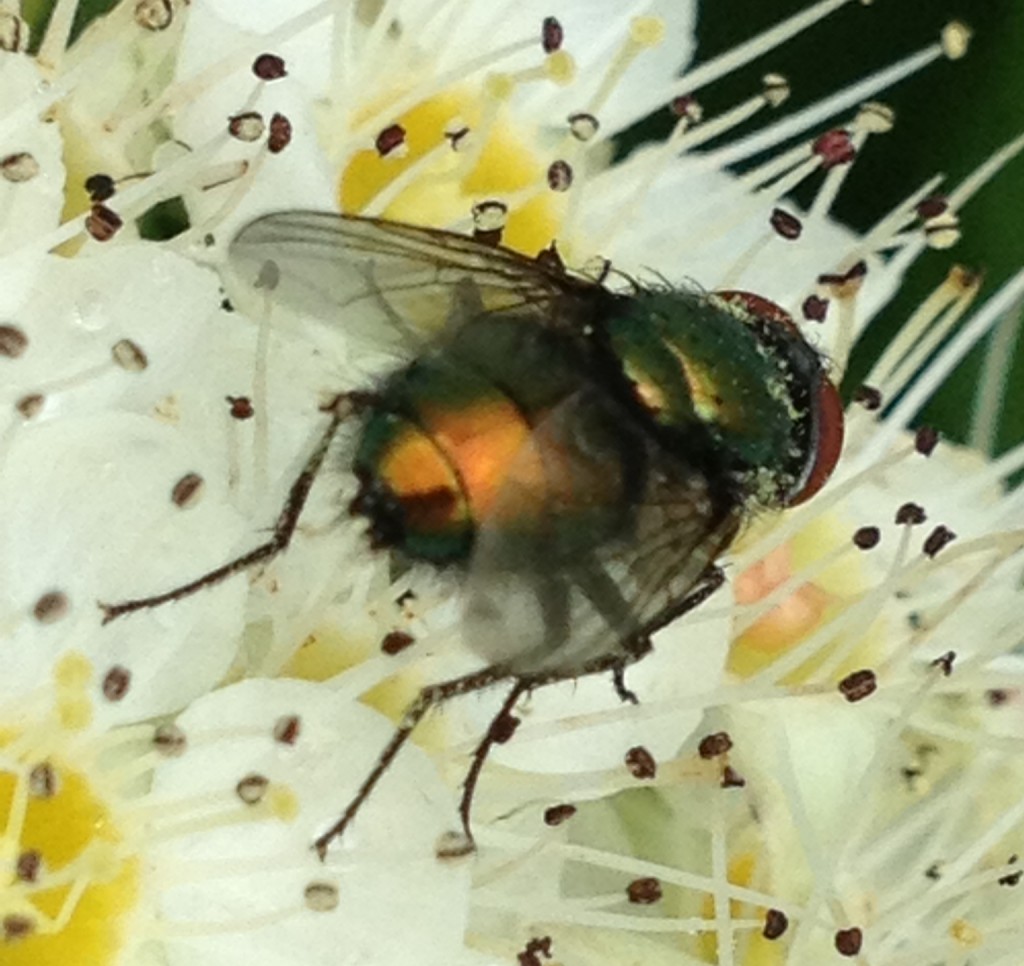
Natasha:
Please help take care of them. They were here before us – hopefully they’ll still be here after we’ve moved on.