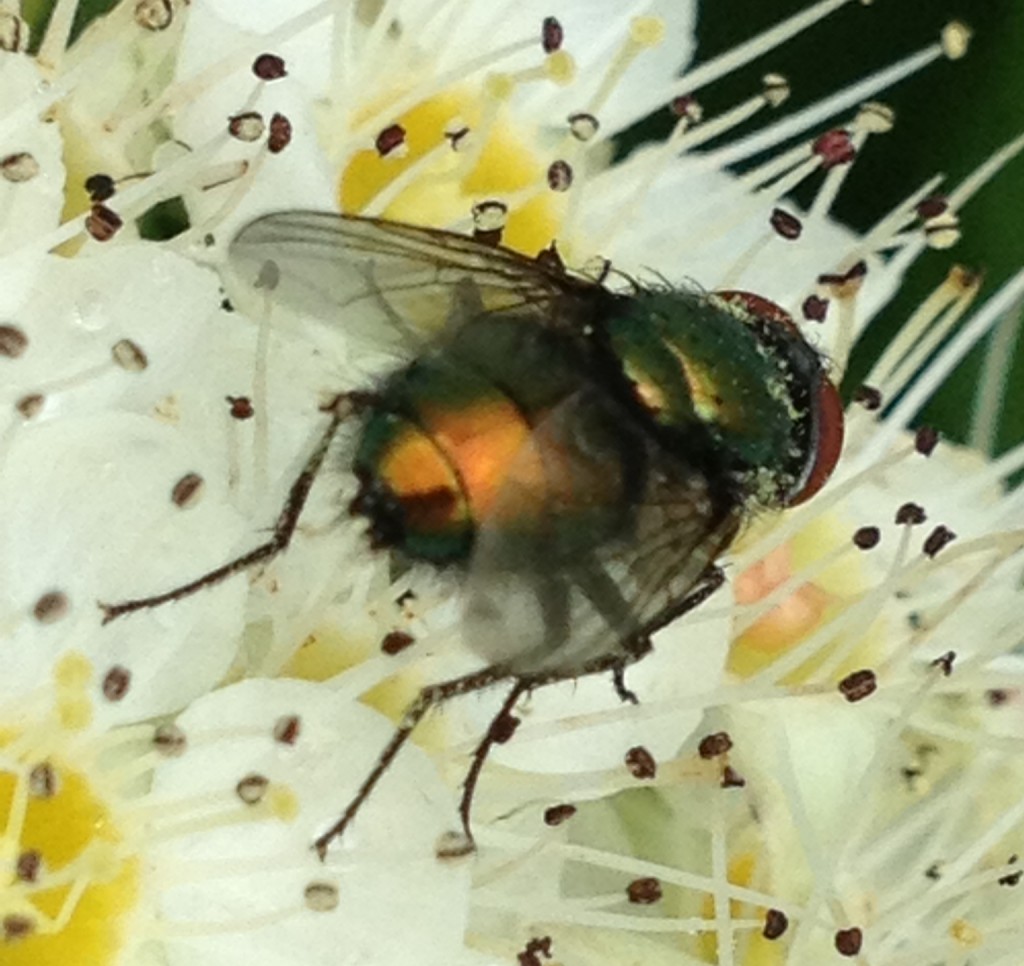
Good Bug? Bad Bug?

Are there really any ‘bad’ bugs? I doubt it. At 341 On The River, our baby birds need bugs as breakfast food.

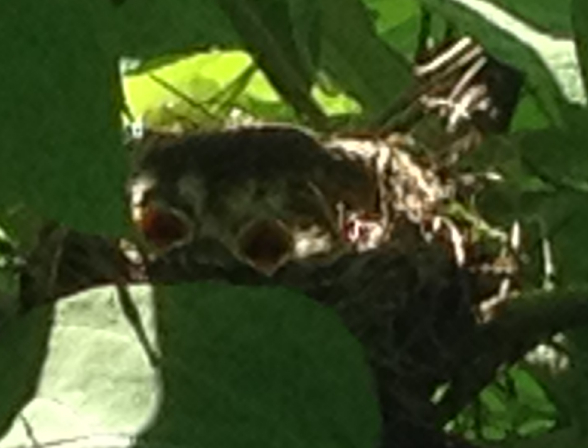
These two in the Robin’s nest in the Catalpa tree just outside the back door, are constantly clamoring for food.IMG_7016
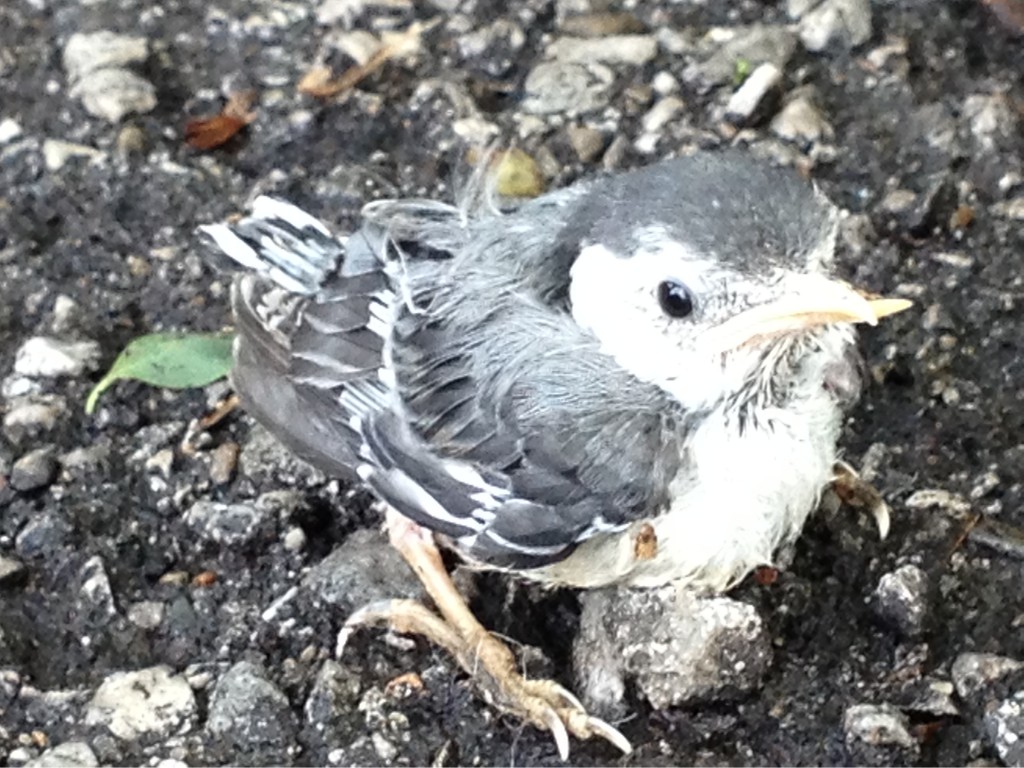
 (Could this sad and hungry one on the ground, with a crossed beak, have been thrown out of its nest?):IMG_6851
 We must not needlessly kill all the bugs in our gardens, fields and roadsides by spraying insecticides everywhere.  If we do we will drive them into extinction, along with birds and other animals who need them as food.  It can’t be right to do that just because we might feel ‘bugged’ by them. Do you realize how few frogs there are now compared to the years of my youth? This is the only one I’ve seen here for many years. IMG_6841

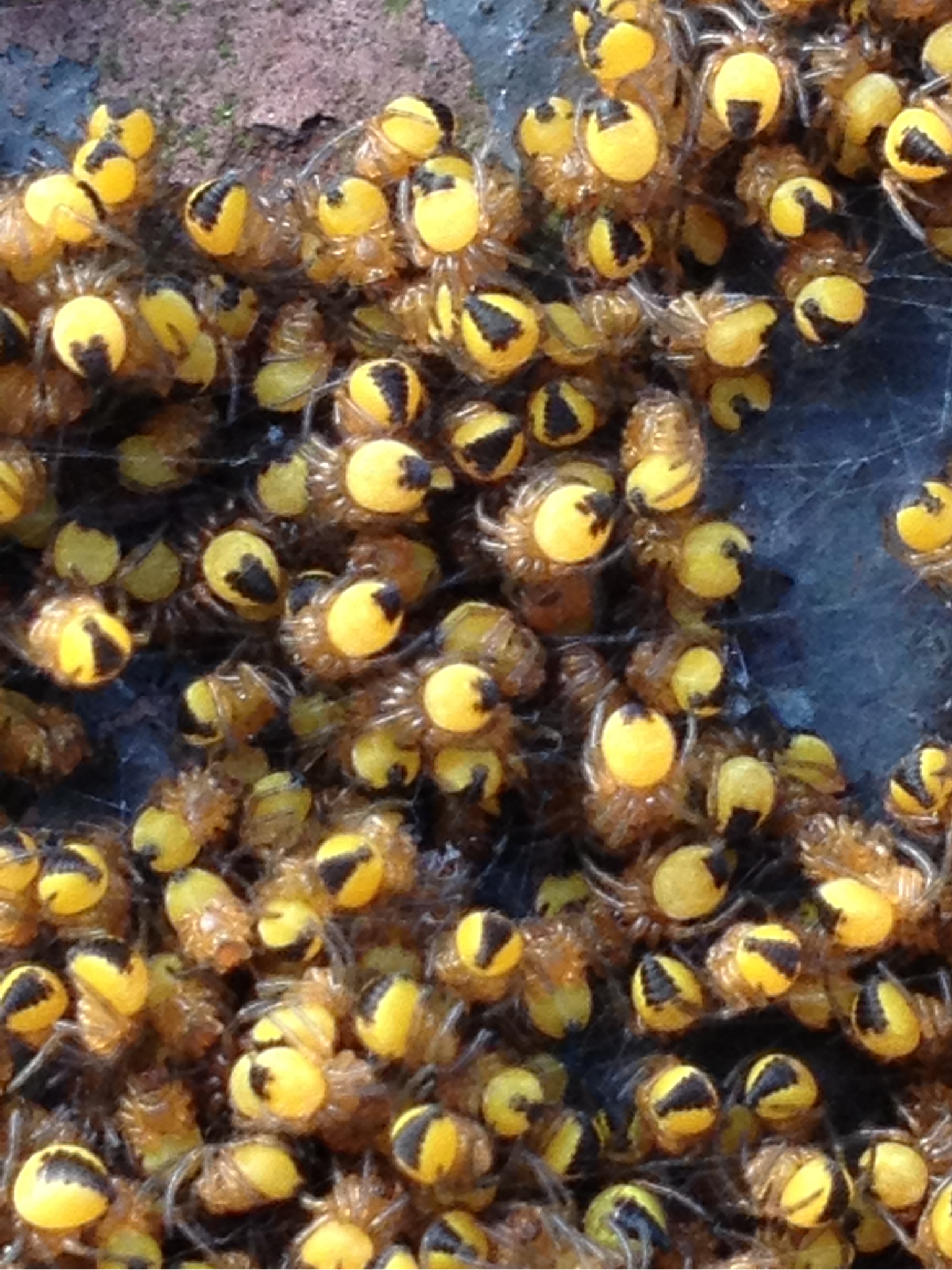
 Spider Stew. Fresh meat for some hungry nest:IMG_6850This great collection was on the back landing just waiting to be discovered by the birds.
 We need these bugs (ants) to open the Peony flowers.  By some evolutionary symbiosis the plant rewards the ants with a sugary food in return for their labor and we get magnificent blossoms in return.IMG_6853

Most bugs are harmless and, like my bees, only reluctantly bite you if they’re forced to defend their homes.

Most bugs need food (not the Mayfly when they finally come out of the water) so don’t be surprised if they try to nibble your naked flesh when they’re hungry and you are tempting them.

I agree mosquitoes and ticks can be a nuisance; black flies can be an even bigger nuisance; cockroaches are only eating the food we leave out for them, and I don’t see much place in the ecosystem for bedbugs.   But we must not poison them all because when we do that there is too much collateral damage to the whole environment (including humans too).

You can readily control bugs by:

  1. Don’t feed them:  simply cover your flesh when outdoors so the ticks and mosquitoes can’t get to you – Bee suit modeled by Tess:    
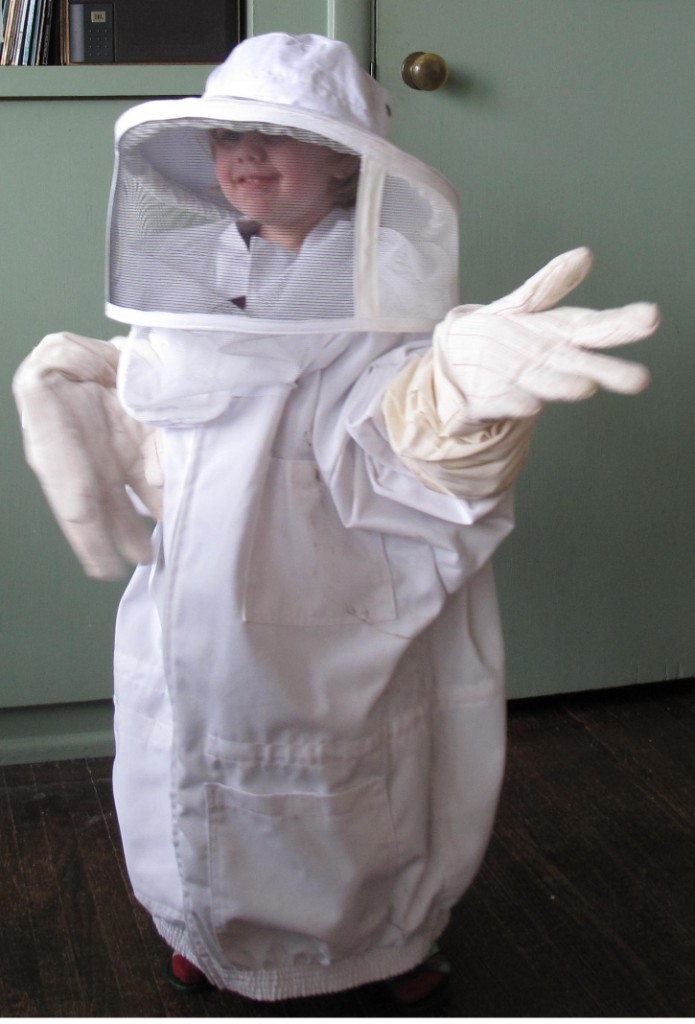
    Tess in bee suit c

2. Don’t annoy them: If you move a wasp’s nest, or try to take the bee’s honey, don’t be surprised at their defensive actions.

3. Starve them out: don’t leave food crumbs around indoors. Keep food in containers with tight doors or lids. Change the sheets frequently to keep bugs out of your bed.

4. Selectively kill the ones you really don’t want: I find it much quicker to simply squish, with my fingers, any aphids and scales on my indoor plants rather than mixing up and applying strange ‘soap’ solutions. (The fruit flies that escape from the banana peels in my worm farm drown happy in the beer and wine trap beside it).  House insects that I don’t want are easily sucked up with a 600 mm (2 ft.) long, 50 mm (2 in.) dia tube on the end of a portable dustbuster vacuum cleaner.

Bugs can help us like the canary in the coal mine: You can easily use them to get a very quick  measure of the water quality at your fresh water river or lake.  The following list shows 3 groups of bugs you can readily find in the reeds, or under the stones, with a 1 mm (1/32 in.) mesh net.IMG_6840

They are grouped by their tolerance to common pollutants. If you find all 3 types, your water is good. If you only find Group 3 then “Don’t drink the water”. (This should be applicable in upper NY state too?)

Here are a few we found in the upper Maumee River:

CrayfishIMG_7017


RupertIMG_6844

Dragonfly NymphIMG_6842

 These are bad bugs. Plastic & Steel River Bugs: IMG_7021

 They are the wash-down of lost lures from the Walleye fisher folk that I collected in the Maumee River this spring.   Sadly they can interfere, often lethally, with many innocent birds further downstream, to say nothing of the hazzard to bare-footed kyakers and windsurfers.

Some bugs are just extraordinary:

 Siobhan’s Rhinebeck, NY, 17 year Cicada.  Their noise was very loud last weekIMG_7012

 The real joy of the bugs in my garden at 341 is the exotic zoo I’ve found there, and it is all for free.  The range of gorgeous designs, forms and colors is endless.  A simple magnifying glass reveals awesome details.  For the hunter in us there is also the thrill of catching them photographically and then trying to make a good ID with the many free internet sites available.

Here are some of my favorites. Many need better ID names which you are free to suggest, but this is a start:IMG_7015

Mayfly  This species is a great water quality indicator. This year Lake Erie at Monroe MI is greatly improved.  They’ve been so thick on the ground that cars have skidded.

Igor:IMG_6855

 Creepy:IMG_6835

Dog Tick:IMG_6856

Most of the following bugs are part of the essential large group of pollinators. Without them most of our flowers wouldn’t blossom and many of our fruit trees and bushes would be barren.

Small Bee:IMG_6846

 Demon Damian:IMG_6837

 This Hover Fly seems to have vertical rather than horizontal wings:IMG_6848

Ivan:IMG_6845

 Rosy:IMG_6849

Natasha:IMG_7018

 Please help take care of them. They were here before us – hopefully they’ll still be here after we’ve moved on.


Hazel Passed Away Peacefully

Geum triflorum_3167

On last Monday evening, Hazel, a very special friend in New York City left us.  She was from Ohio and so we hope would appreciate the small patch of slightly endangered Prarie Smoke (Geum triflorum) plants we have planted in her memory at 341 West Front Street. They have very free and elegant whisps of seed structure and are as unique, creative and unforgetable as she was.

Spring Surprises 2013

This year it was a long, slow spring with a late snow surprising the snowdrops who’d thought it was safe to come up by 21st. Feb.

Snowdrop surviving a late snowfall

Snowdrop surviving a late snowfall

Three days earlier it had been warm enough to lift the lid of my one remaining beehive and see if they were still alive – there they were with stingers extended:

5223 Bee stingers on frame

They were furious that their warm winter blanket had been too soon removed. I was actually delighted (well, almost) to receive my first sting of the season.  Here is the stinger after I pulled it out, under a 50x magnifier:5224 stinger 50x

A month later the crocus was open and the bees started to work, peacefully this time.5574 bee on crocus

Now in the first week of May they are arriving with many different pollen colors:5894 Bees landing wi pollen

They only collect from one flower type at a time. This allows each flower species to be properly pollinated, but to the bee the pollen is only protein and so the pollen is all randomly mixed when they store it in their honeycomb.

Ants and spiders try to enter the hive but few succeed.  The marking on this spider (who was inside the hive)6027 Black Spider

reminds me of the ‘face’ on one I found last year:Skull spider wi dead bee

This white spider appeared to have overcome the bee and was dragging it away.

The Maumee river rose and fell with the rains and the walleye fisherfolk returned:5564 Walleye Fishermen

Obviously pregnant geese5538 Pregnant goose

laid up to 6 eggs at a time, but once again at least 5 eggs were randomly dropped and abandoned around the shore of the small island, surprisingly ignored by birds and  squirrels.5650 Goose plus one lost egg

I’m now told the geese often do this for no apparent reason!

Today (5/8) I saw different families of one, three and twelve goslings each.6118 Two goose famiilies 3 n 12

But on the grass there was a simple pile of down telling of some sinister happening5865 lost down


There is one lively squirrel who repeatedly travels a treetop route every day – too quick to catch in mid-air with my cell phone camera but I keep trying.  Keith at ikedabarry.com kindly morphed my two separate photos, taken seconds apart, into one ‘before and after’, showing the proper gap between the trees – see below:flying sqrl 001

He then offered me the choice of two images of what I saw, or what I thought I saw. They’re both so great I can’t decide between them:

flying sqrl 002
flying sqrl 002
It also eyes the bird feeder and approaches, claw over claw, on the window screening. Alice the cat enthousiastically watches that.5888 Squirrel at feeder

The magnificent Red Trillium is open.

5937 Red Trillium green leaf

Its leaf (Later: I think it is the ‘Sepal’ rather than the leaf) sometimes carries a beautiful blaze of red also

6038 Red veined green leaf T

The flower reportedly has a carrion odor that attracts flies for pollination.

6022 fly on Trillium

To me it smelt more like baked ham. Does anyone know the odor of Ontario’s white Trillium?

For years I’ve pulled dandelions in the front garden.5920 misc dandelion roots

Looking closely I now see where a new leaf and flower stem can readily grow from where the old root snapped during the previous weeding.5921 new D on old root

Ohio State Extension says you need to pull 4 to 6 inches (100 to 150 mm) of root when weeding this alien invasive. They say that even then it might still regrow, in which case they simply recommend pulling it again. Good thing I’m retired and have nothing else to do!

A little further along Water Street, beside the X-Country ski trail, are two “Vernal Pools”6045 Vernal Pool

In Spring they fill with water and teem with life, then dry up in the summer. Not being connected to the river, they have no fish and so a very different ecosystem can flourish. Scooping a small net immediately catches many strange, to me, creatures. They are so small that water to them is viscous and they swim with peculiar, jerking motions. Hard to persuade them to keep still for my simple 50x magnifier photos. The scale is in mm with the bug immediately below being about 2 mm dia.6065 Pregnant Bug

I presume the one below is a just hatched egg from the one above.

Later: Naturalist, Karen S. kindly id’d the one above as a Water Flea, and one of its progony below.

6072 Baby bug

She says the next two are Mosquito larvae.

6070 Bug no 46067 Bug no 36066 Bug no 2

And the last Spring Surprise shows a good reason to keep your meadow grass short and your feet shod, though lacking a rattle tail I doubt it was dangerous. At about 30 inches (750 mm) long I could not immediately identify it on-line. Any suggestions?

Later: Nat S. says it’s a Garter Snake, paler than usual because it might be preparing to shed it’s skin – Thanks Nat.6091 2pt5 ft snake

6097 Snake Head

This one was more anxious to hide in the shrubbery than to attempt to eat the photographer.