Winter Security

Cross country skiing in Perrysburg this winter has been on thin snow, but there have been four good days so far. The key to a good trail is enough snow and preferably have it frozen into good grooves.


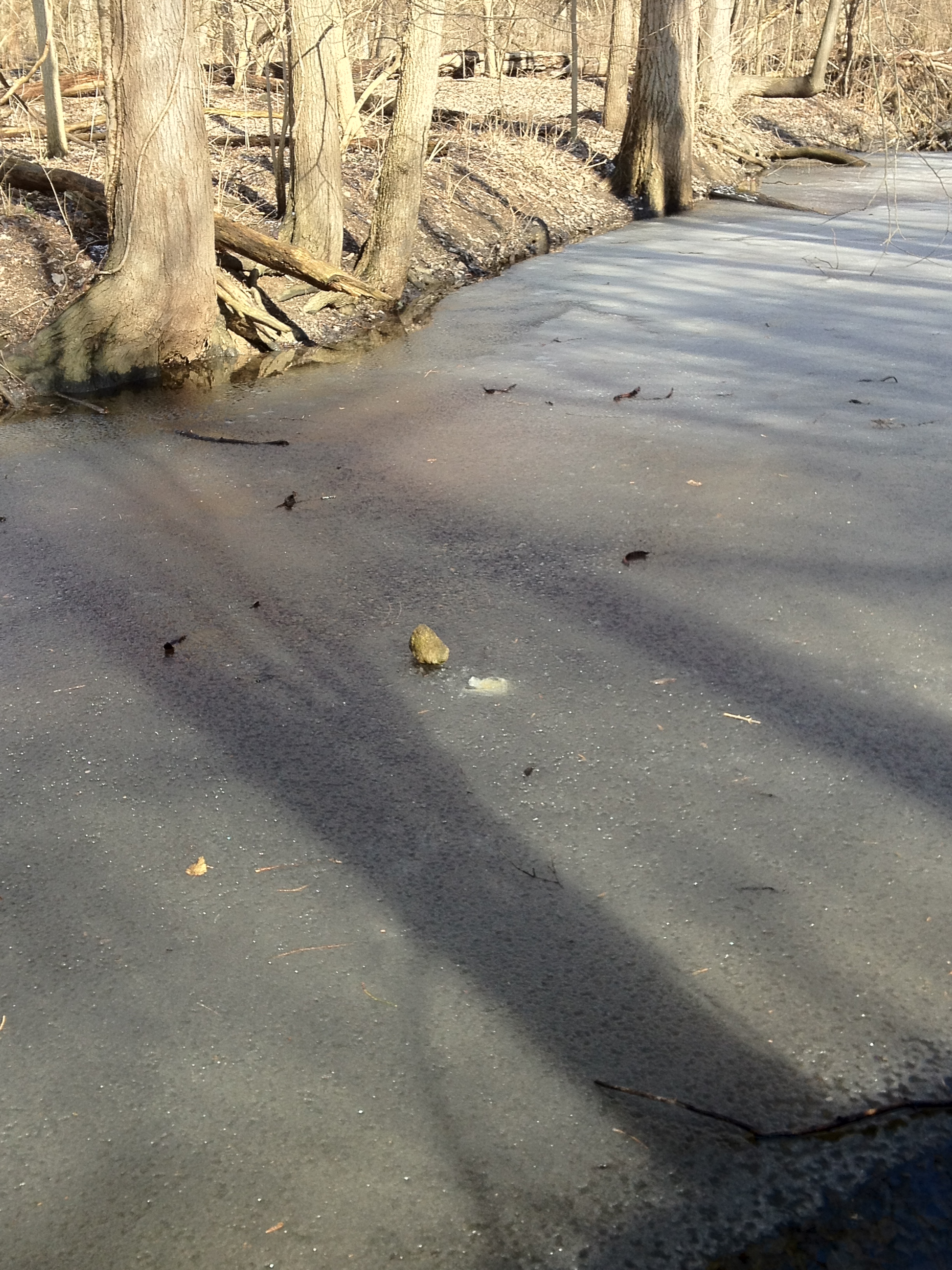
We had thin powdery snow which barely covered the grass and gave NO directional Security (unlike this photo from a few years ago). Down on the bayou the bare ice there also provided no security and led me into another crash, this time with a tree stump, resulting in another bump.


The interesting thing is the damage was surprisingly detected a week later by the millimeter full body scanner


at Detroit airport where I was taken aside for a pat-down, right on my sore spot.   In this country of very expensive medical treatment here is an interesting almost-free one available to all. Don P. is investigating for me how deep it can measure.

 I was flying to Montreal where the students happened to be protesting their first fee hike in 40 years, not appreciating that 40 years inflation had reduced their fees to ridiculously low amounts.

The pepper spray (from the Globe and Mail paper next day) looked serious. I only saw scary Security police and heard much shouting.


Back home the strange weather has given my snowdrops a snowy Security blanket


 which shielded them from the coldest temperatures.  They happily opened up fully the next time the sun shone. (they’ve been in flower for 4 weeks now).


Unlike our poor rhubarb which got badly bruised by the frost when it came up too soon in the unusual warmth of this year’s January. 

Meanwhile Mr. Pinot never tires of performing with no Security net (and he has no front claws!), walking the rail of near-terror, in return for just a little well earned reckognition and admiration.

Aphids, Fruit Flies, Bees & Meteorites – Errata, Omissions & Addenda

1.  I used insecticidal soap which wiped out the tiny black aphids (in my “Jungle In Here” blog) but unfortunately it also eliminated all the orchid blossoms.

2.  For the yellow aphids on the Oleander

 I’m now brushing them off with a fine brush and I have 2 good looking buds.

3.  I’d wrongly blamed my little red wiggler worms for creating the large wine-tasting fruit fly population. I seems that open wine bottles, even with surfactant detergent to discourage water walking, starts an orgy. I’ve no idea where they do it but next day there are hundreds more fruit flies, and all are thirsty.  Simply terminating the test eliminated them all, except for one or two teetotallers on a vase of cut flowers.

4.  One amazingly warm (7 C (45 F)) day last month (Jan.) allowed me to quickly opon the hive to check that the bees still had food:

Now I see I’ve left them too much and could have harvested more but they are all happy, even hatching a few eggs,

and I hope they were glad to see me evict one clump of about 20 small hive beetles.

Now (Feb 11) it’s below freezing, as normal for this time of year, and yesterday they licked, fanned or shoveled the snow out of their doorway all by their sweet little selves.


Meanwhile, last week in down-town Phoenix, I carefully examined street flowers and had only found one single insect, until I discovered white flowering Pear trees with many happy, pollen laden honey bees.

5.  Trying to walk to the Phoenix Botanical Gardens I saw a map location which said “U of Arizona Meteorite Collection”. There I learnt that the body of a meteorite coming in from deep space is very cold despite having a momentarily hot skin for the short time while it hits our atmosphere.  To prove it, the U of A collection has one with unsinged grass stuck to it. So that nullifies the hot rock experiment in my recent “Winter Works” blog, but it does improve the chance of finding one on cold clean frozen lakes because it won’t be hot enough to melt its way through the ice.


And as to their value: the last one above is a ‘Carbonaceous Chondrite’.  Bruce Draine’s “Physics of the Interstellar ..Medium”, p. 267, says that about 1/10 of 1% of the weight of that type is composed of Nanodiamonds! Unfortunately a nanodiamond is only about 2 nanometers across (about 1/200 the wavelength of blue light) so don’t expect to see any sparkle.

Scott F. has a good idea for finding meteorites: watch for a-typical stones when snorkling over flat sandy sheltered bays. They might lie there for a long time before getting covered.

Meanwhile I continue to check flat roof tops of taller buildings. These days they are often covered with light grey sheet plastic roofing material rather than the asphalt of old. Apart from bird droppings there is very little granular material up there.

Please let me know if you find one?

Winter Works

Finally a snow fall last weekend with snow so pure that when I shovelled it off the balcony it left a puff of the finest snow smoke in the air – sorry, no sun so no photo.

First Winter Works job: shovel the bee hive doorway. A few hours later they were pitching out their aged dead. I’m assured it’s a sign of a healthy hive!


Next task was to set the Cross Country Ski Trail for the first time this winter. There was enough snow for two full days excellent skiing.  The trail now has room for 3 levels of skier. The delightful trail on the second day showed that it is shared with deer and cayote judging by the tracks. All I need now is more snow and more skiers.

(The map is under development. Google mistakenly thought I was trying to edit their view of Perrysburg and I failed an audit of my changes by one of their “trusted reviewers”!)

Meanwhile “Munger Mogul” looks like this, with a nice herringbone climb up and easy glide down towards “Belazi Bowl”.


The final winter work is the perhaps surprising task of watching for meteorites.  Brian Pejovic in “Man and Meteorites” says about 10 tons per day of space stuff land on earth. Roughly speaking that converts to just over one small (1/8″ or 3 mm dia) piece per square mile per day. Winter ice is the perfect place to look for one.  I checked that they don’t melt through even though they’re very hot when they land by heating a variety of different size stones, from the dirt road by the river,

to yellow/orange color (about 1000 C or 2000 F).

I put them on ice and watched them partially sink as they melted the ice and cooled.

By the time they had completely cooled they had only sunk about 2/3 of their size, no matter whether they were large or small. (Big ones have more heat but would have to melt more ice before they could sink out of sight). So this shows that hot meteorites probably don’t melt through ice when they land.

Another test I did for the bigger ones was to lob a 5 lb. rock onto about 2″ thick ice, from a height of around 20 ft.  While the rock punched a hole in the ice, the water behind it prevented it from going through like a stone through a glass window. The rock simply bounced a short distance away.


From all this I conclude it is well worth watching for odd stones in the very small to tennis ball size range when you are out on the ice.

One of the best ways to increase your chances of finding one is to increase the search. So if all the blog readers look we actually might catch one. Let us know if you do? A bigger one is very valuable – pick it up carefully with a clean paper to keep it pure.